A Legacy of Building, Service, and Community Trust
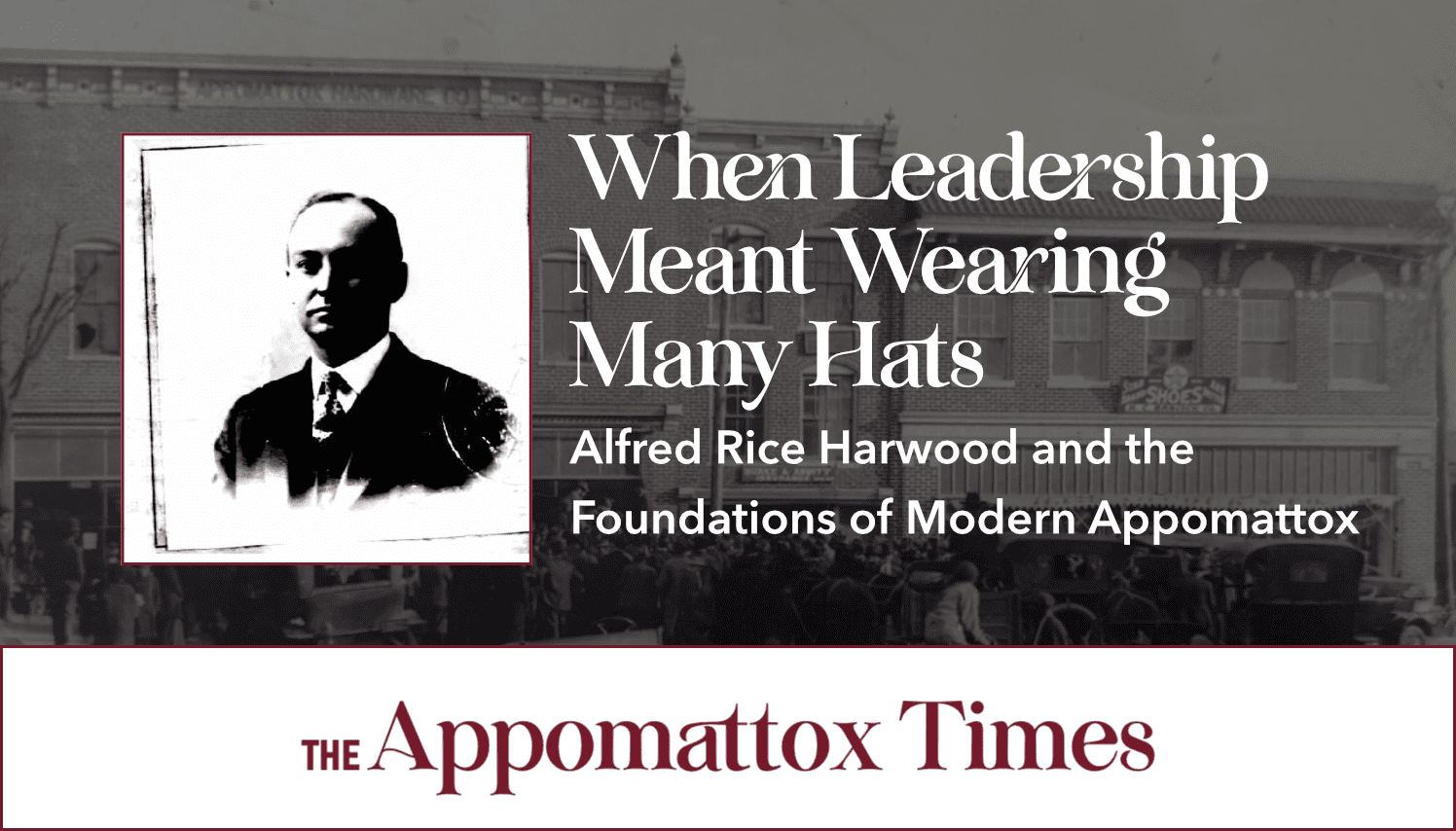
When we consider the life and contributions of Alfred Rice Harwood (1880–1951), we see far more than a simple catalog of job titles and achievements. We see a portrait of a man who personified the civic-minded entrepreneurial spirit of early 20th-century America. Appomattox County was changing rapidly, inching its way out of an agrarian past and into a new century defined by railroads, automobiles, and the promise of broader markets. In this environment, leaders like Harwood stepped forward—blending business acumen, public service, and a deep personal commitment to improving their communities.
The Early 1900s: An Age of Builders and Doers
Between 1900 and the start of World War I, the United States underwent a period of intense economic growth and innovation. Electricity, telephones, automobiles, and new forms of mass communication began knitting the country closer together. In smaller towns especially, “progress” arrived hand in hand with local entrepreneurs who organized banks, built water systems, expanded postal services, and founded essential businesses. In Appomattox, Alfred Rice Harwood was at the forefront of this wave—his work laying much of the groundwork for modern infrastructure.
Founding a Bank, Leading the Community
When Harwood organized The Farmers National Bank in 1917, his role as the bank’s first and long-serving “cashier” was akin to that of a chief operating officer today. In the early 20th century, the word “cashier” described an officer responsible for day-to-day operations, lending decisions, and balancing the bank’s books. The position was as prestigious as it was critical: a local bank officer could make or break new businesses, decide whether farms had funding for spring planting, and ultimately help shape the town’s economic destiny. The trust placed in someone like Harwood was enormous, and that trust was reciprocated through the bank’s success and stability.
Postmaster as a Key Community Builder
Harwood’s tenure as Postmaster after 1931 came in an era when local post offices were more than just distribution centers. They were hubs of daily life and vital communication links for both government services and private citizens. Because he was chosen to fill the position when the incumbent unexpectedly passed away, it suggests how respected he was in official circles. His appointment was more than simply a paycheck; it was a civic trust, an expectation that he would bring integrity and efficiency to a role that many saw as indispensable to a thriving town. Under his stewardship, the Appomattox Post Office reached First Class status—a milestone that validated both the town’s growth and Harwood’s personal dedication to serving the public.
Changing Conceptions of Power and Prestige
Looking back, the array of roles Harwood held—cashier, postmaster, hardware store founder, oil distributor, life insurance agent, sawmill operator, real estate broker—might make modern observers wonder about conflicts of interest. How could one individual wear so many hats without raising eyebrows?
Yet in small-town America of the early 20th century, that blend of public service and private enterprise was not only common but highly valued. A trusted businessperson with a reputation for honesty was naturally called upon to guide other civic and economic institutions. People wanted to see those they already trusted in positions of influence—especially in places where infrastructure was scarce and progress hinged on a few energetic individuals.
Today, we often view such overlapping roles with caution. Modern regulations and cultural norms place a higher priority on preventing conflicts of interest. Federal laws and professional oversight groups scrutinize relationships between government, business, and community entities. That transformation is a testament to how society has grown more complex, with more stakeholders and regulatory frameworks.
In Alfred Rice Harwood’s world, however, the lines were deliberately blurred. A single person’s success often benefitted the entire town—indeed, a “rising tide lifts all boats” mindset was both an economic reality and a moral expectation. When the man who owned the hardware store also ran the bank and then improved the local water system, no one questioned his motives; they saw tangible improvements in daily life. To suggest impropriety or call for his resignation would have been puzzling or even offensive to many contemporaries. His many ventures provided practical solutions that propelled the county toward modernization.
Then and Now: Two Eras of Sweeping Change
We live in a time often compared to the “Roaring Twenties,” with technological leaps in digital communication, artificial intelligence, renewable energy, and global connectivity. Just as Harwood and his generation embraced the motorcar, electrification, and rapidly developing manufacturing techniques, we face similar seismic shifts. In both eras:
- Innovation Outpaces Regulation
- Early 1900s: The automobile, new machinery, and centralized banking systems flourished before widespread regulatory frameworks were in place.
- Present Day: Online marketplaces, cryptocurrency, telemedicine, and AI disrupt traditional industries faster than governments can pass regulations.
- Infrastructure as a Keystone of Progress
- Early 20th Century: Water systems, roads, and postal routes changed how people lived and worked, helping to unify communities.
- Today: Broadband internet, smart grids, and sustainable energy networks are viewed as essential for ensuring economic growth and global competitiveness. And, in the case of Appomattox, water and sewer are just as relevant now as they were at the turn of the previous century.
- Social Transformations
- Early 1900s: The era saw major migrations from rural to urban areas, changing labor markets, and new consumer cultures spurred by mass production.
- Now: Digital platforms allow remote work, global talent pools, and the emergence of new social norms around information sharing, data privacy, and work-life balance.
In both settings, the call to action for community leaders has remained strikingly similar: “Step up, build something useful, and unite the people around common goals.” Harwood’s life story reminds us that true progress often requires visionaries willing to wear multiple hats—who see no contradiction in being a banker, a builder, a postmaster, and a pillar of church and civic life. Though in the 21st century we might use different terminology and governance structures to ensure fairness, the basic principle endures: communities flourish when capable, ethical individuals bring their talents to bear across many domains.
A Remarkable Man for a Remarkable Time
Alfred Rice Harwood’s obituary recounts decades of momentum-building for Appomattox County. Each new venture—from his hardware store to the local Ford dealership, the water system acquisition and improvement, and finally the First Class Post Office—was a sign of a leader who refused to settle. His energy and foresight matched the tempo of an America eager to harness fresh opportunities. Though his era has long since passed, his example of resourceful leadership, community trust, and moral commitment remains profoundly relevant.
The early 20th century’s heyday of bold expansion resonates strongly with our modern drive for revitalization and transformation. Harwood’s life underscores a timeless lesson: when public-minded entrepreneurs step forward with integrity, they can reshape an entire region—and leave behind a legacy that inspires future generations to find their own ways of elevating and uniting a community.
In memoriam, Alfred Rice Harwood (1880–1951).
May we remember not only the roles he filled, but also the spirit in which he filled them. His work helped bridge the gap between a rural, agrarian past and a connected, forward-looking future—lessons that continue to guide us as we face our own century’s promise and perils.