Blog

  • Appomattox School Board Receives 14 Applications in Superintendent Search

    The Appomattox County School Board has officially closed the application window in its search for the next superintendent, receiving 14 full applications from a pool of 20 inquiries.

    Applicants bring a wide range of educational leadership experience:

    • 2 are current or former superintendents,
    • 2 hold or have held assistant, associate, or deputy superintendent roles,
    • 6 are central office administrators,
    • 3 currently serve as principals,
    • and 1 applicant falls under another category of educational leadership.

    Of the 14 applicants, 9 are women and 5 are men. The majority—12 candidates—are from Virginia, while 2 come from out of state: one from South Carolina and one from Wisconsin.

    The School Board will begin reviewing candidates in the coming weeks as part of its effort to identify a qualified and community-minded leader for Appomattox County Public Schools.

  • Community Voices Shape Vision for New ACPS Superintendent

    Community Voices Shape Vision for New ACPS Superintendent

    Appomattox County Public Schools (ACPS) recently conducted a public survey to gather input from staff, parents, and community members on the hiring of its new superintendent. With over 200 respondents, the feedback highlighted key expectations, challenges, and areas for improvement within the district.

    The full report can be found here: Survey Results

    Survey results indicated a strong preference for hiring an external candidate, suggesting a belief that fresh perspectives might positively impact the district’s direction and alleviate internal frustrations.

    Respondents expressed concerns about micromanagement from current administrators, leading to feelings of being undervalued and mistrusted among teachers and staff. This sentiment aligns closely with another frequently mentioned issue—low morale across schools. Staff identified inadequate communication, insufficient support from central office administrators, and overall dissatisfaction with some central office personnel as significant contributors to poor morale.

    Transparency and honesty were emphasized as essential qualities for the new superintendent. Respondents stressed the need for clear and open communication, suggesting a desire to rebuild trust and improve handling of sensitive district matters.

    Concerns regarding favoritism and personal relationships influencing professional decisions were also mentioned. Respondents called for fairer hiring and advancement practices based strictly on merit rather than personal connections.

    Additionally, respondents voiced concerns about political or ideological influences on school policies, particularly related to DEI (Diversity, Equity, Inclusion) and LGBTQ+ topics. These concerns highlight existing community tensions around curriculum content and social issues, with respondents seeking balanced and unbiased approaches.

    Behavioral management, particularly addressing student and staff bullying, was noted as needing improvement. Respondents advocated for more effective measures to manage discipline and bullying.

    Special Education programs were identified as an area of significant concern, with respondents noting issues such as unfilled vacancies, management challenges, and overall dissatisfaction among staff and parents.

    Lastly, teacher salaries and retention emerged as critical issues. Respondents expressed clear frustration regarding compensation and emphasized the importance of retaining experienced educators to ensure educational quality.

    Overall, the survey highlights a strong community commitment to Appomattox County schools and underscores the need for leadership that prioritizes transparency, effective management, fairness, and unbiased decision-making.

  • Opinion: A County-Level Rebalance: Three Ideas for a Generation Left Behind

    I think it’s time we talk about generational imbalance, particularly in how our government allocates resources and political influence. If we’re serious about keeping communities alive for the long haul, we need bold local action. Not just federal rhetoric.

    Here’s what I propose, at the county level:

    • We eliminate property taxes for anyone under 40 earning less than $100,000 a year.
      • We provide heavily subsidized (free) daycare for working parents.
      • And we restrict housing incentives: grants, tax abatements, or low-interest loans, for people under 40 who are buying single-family homes.

      All three of these ideas are local. We don’t need to wait for Congress. Counties control property taxes, zoning, childcare grants, and local incentive structures. This is about political will. The hard truth is that young people don’t vote at the same rate as older generations, and so their interests are not equally represented. This is the root of the problem.

      We live in a country where retirees vote in droves, and their lifestyle has been heavily subsidized, often by borrowing from the very people who can no longer afford a home or daycare. The numbers don’t lie: we are not a rich enough society to support non-wealthy, non-working adults living alone, indefinitely. We’re simply not. And we haven’t been for a while.

      Instead, we need to embrace multi-generational housing, not as a step backward, but as a return to interdependence. That requires families to get along, yes. But more than that, it requires acknowledging a painful truth: one generation handed off a country with rusted-out infrastructure, the long tail of globalism, a student debt crisis, and inflated asset prices. Saying “I wasn’t in charge” doesn’t cut it anymore. You didn’t need to be a billionaire to benefit. Americans of a certain generation got a better deal, cheap college, affordable housing, stable pensions, and many voted to keep it that way, even as it disappeared for others. A lack of wealth in retirement doesn’t absolve someone of having supported or profited from a system that burdened those who came after.

      I used to be quieter about all this. More “go along to get along.” But after my daughter Vienna was born, something shifted in me. The stakes feel clearer now. Generational responsibility flows in both directions, and I want Vienna to inherit a world where that burden is shared fairly. Of course I don’t want older people to suffer. I’d love for everyone to afford dignified care until the very end. But we can’t build a society on what we wish we could afford. We have to build on what we can.

      My fear is that Gen X, squeezed in the middle, will be blamed for a crisis that began before them and worsened under them. And while blame is easy, it doesn’t help. What helps is naming the problem, suggesting local solutions, and getting more young people to see themselves as political actors with power, if they use it.

      I don’t write this to provoke. I write it because I care. Because I think there’s still time to realign our local priorities. And because if we don’t start soon, Vienna and her generation will be paying off debts: economic, social, and environmental, that they never agreed to take on.

    1. Appomattox True Value no longer locally owned: New York Firm purchases historic business

      Appomattox True Value no longer locally owned: New York Firm purchases historic business

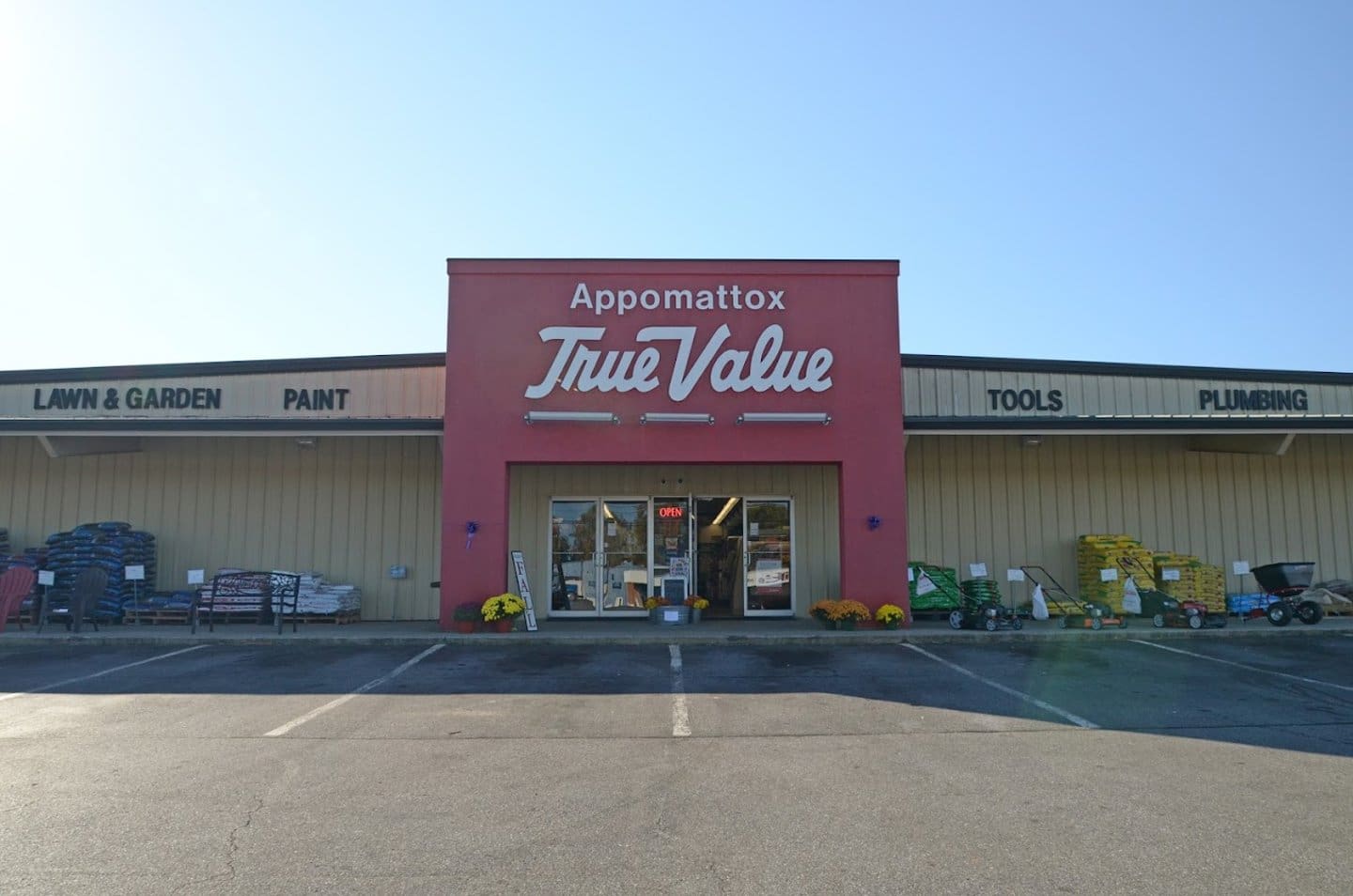
      Costello’s Ace Hardware, a New York-based firm and one of the nation’s largest family-owned Ace Hardware retailers, has acquired Appomattox True Value, located at 7194 Richmond Hwy, Appomattox, Va., 24522. This acquisition marks a significant shift for the local business, which had previously operated under local ownership since its founding.

      The Appomattox True Value is the direct successor to the Appomattox Hardware Company, originally organized in 1913. Mark Malkiewicz purchased the business in 1996, maintaining its longstanding tradition of community-focused service and local reliability. In 2011, True Value Company honored the store as one of the “Best Hardware Stores in Town.”

      Costello’s Ace Hardware, established in 1973 by Vincent Costello, now operates 52 locations across New York, New Jersey, Pennsylvania, Maryland, and Virginia. The Appomattox store is being immediately converted and rebranded as Costello’s Ace Hardware of Appomattox.

      Local customers can expect significant changes, including a store remodel and new product lines from prominent brands such as Benjamin Moore, Milwaukee Tools, DeWalt, Craftsman, Weber, Traeger, Big Green Egg, YETI, Scotts, and EGO. The existing store staff will remain employed under the new ownership.

      Michael Costello, CEO of Costello’s Ace Hardware, stated, “We are proud to welcome Appomattox True Value into the Costello’s family. Mark and his team have established a remarkable business deeply rooted in community values. We look forward to enhancing the customer experience with expanded product offerings and an improved store environment, all while respecting the rich heritage of this historic local business.”

    2. PUBLIC NOTICE – Rezoning Petition for 11799 Richmond Highway

      COUNTY OF APPOMATTOX

      Department of Community Development

      P. O. Box 863

      Appomattox, VA 24522

      434-352-8183

       PUBLIC NOTICE

      Notice is hereby given that the Appomattox County Planning Commission will conduct a public hearing for the following zoning petition in the Appomattox County Board of Supervisors Meeting Room, 171 Price Lane, Appomattox, Virginia on Wednesday, April 9, 2025 at 6:00 p.m. 

      RZ250174–Ideal Design Services Inc. (property owner), Clarke Campbell (applicant/agent) has requested to rezone property, located at 11799 Richmond Highway (Route 460), 0.07 miles west of its intersection with Heritage Trail (private lane) in the Appomattox community, from A-1, Agricultural Zoning District to Conditional M-1, Industrial Zoning District.  The intended use is a Contractor Yard and Warehouse/Distribution facility. The petitioner has submitted a Proffer Statement that will limit the number of potential commercial/industrial type land uses.  The Tax Map Identification Number is 77 (A) 119. The parcel total is 3.652 acres in size. The property is designated as part of the Richmond Highway Eastern Commerce Corridor by the Appomattox County Comprehensive Plan, which supports commercial/industrial growth along this corridor. 

      A copy of the petition is on file in the County Administrator’s office, 153A Morton Lane, Appomattox, Virginia.  All persons desiring to speak on these applications will have the opportunity to do so at this meeting. 

    3. News Desert? Not Here: Times Brings on Lynchburg and U.Va. Graduate William Masselli

      News Desert? Not Here: Times Brings on Lynchburg and U.Va. Graduate William Masselli

      The Appomattox Times is pleased to welcome William Masselli to our reporting team. Masselli brings local journalism experience combined with a strong background in finance and accounting that will enhance our business and community coverage.

      Masselli has published over 90 articles as a news correspondent for Womack Publishing Company in Chatham, Virginia, where he established a reputation for in-depth coverage of local affairs and community issues. He previously served as Editor-in-Chief of the Critograph at the University of Lynchburg.

      A recent graduate with a Master’s degree in Accounting from the University of Virginia (2024) and a Bachelor’s degree from the University of Lynchburg (2023), Masselli brings analytical expertise to our reporting team. His experience interviewing local leaders, educators, and government officials positions him well to deliver insightful coverage of the Appomattox region.

      Masselli has been recognized with the Thomas M. Berry Scholarship from the Virginia Society of CPAs and the George Willie Scholarship from the American Institute of CPAs, reflecting his commitment to excellence in both his accounting and journalistic pursuits. He was also a finalist for the Robert L. Hill Award at the University of Lynchburg in recognition of his journalism and mentoring success.

      His connection to our community runs deep, with previous Appomattox community involvement that gives him valuable perspective on local issues and concerns.

      When not reporting, Masselli continues to serve the community through his accounting work and previously volunteered as a CHAMPS mentor in Lynchburg.

    4. BREAKING: Cyber Incident Closes Appomattox County Public Schools

      BREAKING: Cyber Incident Closes Appomattox County Public Schools

      Appomattox County Public Schools will be closed Tuesday, February 18, following a cybersecurity incident that disrupted some network systems over the weekend.

      In a statement posted to Facebook, ACPS officials said they have engaged outside cybersecurity experts and notified state and federal authorities as they investigate the incident.

      While essential school operations, including security cameras, doors, and phone systems, remain functional, internet service and other network-based systems are temporarily affected.

      Officials say they will update the community as they assess the potential impact on personal data and work to restore full operations.

      More details to come.

    5. New Sculpture on Main Street: “The Limits of the State” and the Art of Speaking (or Not Speaking) Freely

      New Sculpture on Main Street: “The Limits of the State” and the Art of Speaking (or Not Speaking) Freely

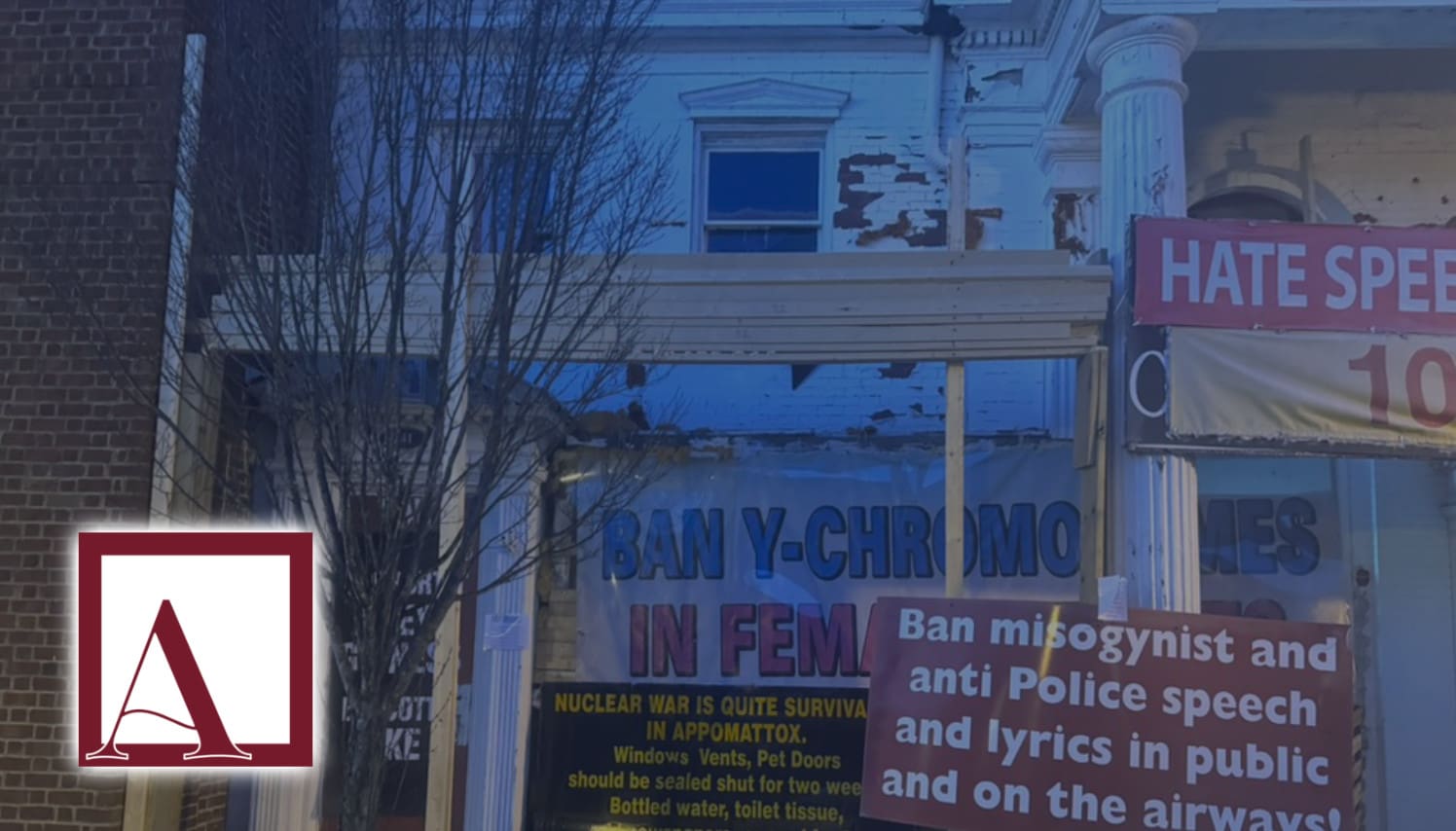
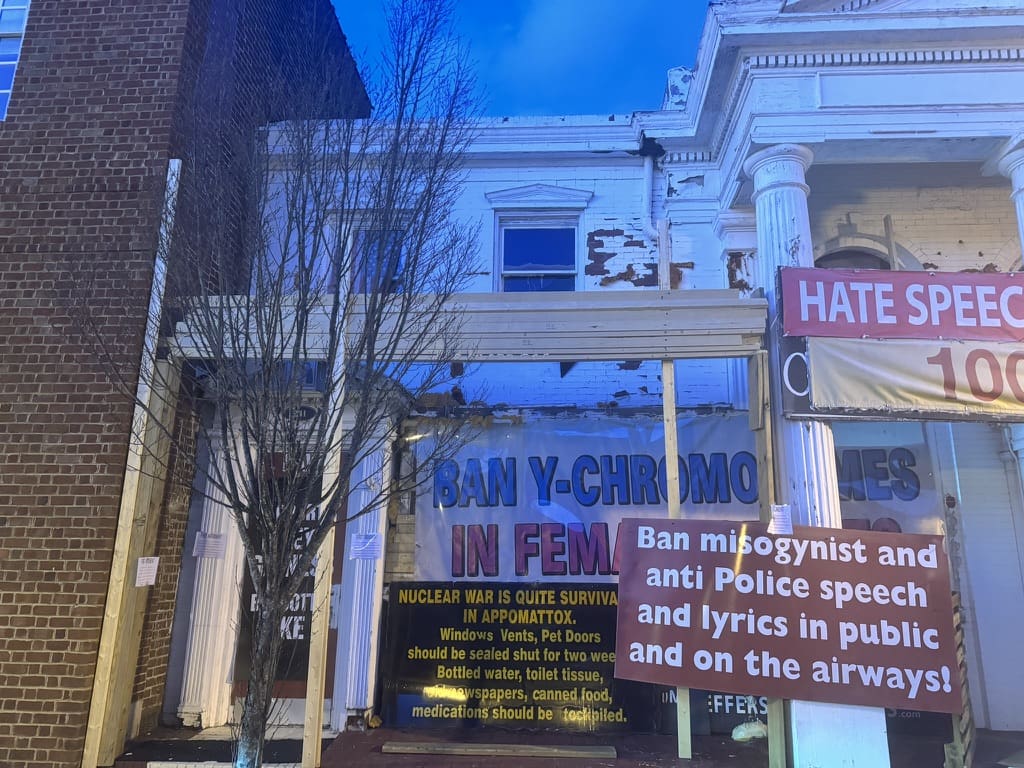
      APPOMATTOX—There is a kind of tenuous grandeur to the scaffolding of democracy, and nowhere is this made more literal than in The Limits of the State (2025), a mixed-media installation currently displayed on a storefront in downtown Appomattox. Constructed from humble materials—#2 pine, Portland cement, and hex-drive tapcons—this piece speaks not only to the structural fragility of free expression but to the forces that seek to encase, reinforce, and, at times, erase it entirely.

      At first glance, one might mistake The Limits of the State for an act of emergency renovation, the haphazard bracing of something coming apart at the seams. But step closer. Notice the thirteen wooden beams, a deliberate invocation of the thirteen original colonies, now repurposed not as a foundation of freedom but as a barricade. These slats of wood, hastily joined and industrially fastened, stand in as both sentinels and jailers—protecting what remains, enclosing what cannot escape.

      It is in this setting that we see the quiet tragedy of a single laminated sheet of copy paper, bearing the First Amendment, almost invisible against the more assertive proclamations of authority. Just inches away, a imposing red banner commands:

      “Ban misogynist and anti-police speech and lyrics in public and on the airwaves!”

      The contrast is stark: the most foundational liberty in American life, printed in the size of a lunch menu, is rendered a whisper against the roaring decree of censorship. The piece forces us to ask: What is the role of free speech in an era of compelled silence? Where do the boundaries lie between protection and prohibition, between public safety and the policing of thought?

      And then, the deeper question lingers—a reference to that enduring legal metaphor, the proverbial ‘crowded theater.’ Has the artist presented us with a crisis of irresponsible speech or a society too willing to bar the exits before a word has even been uttered?

      The genius of The Limits of the State lies in its incompleteness, its refusal to provide an answer. It is at once a work of warning and inevitability, a portrait of a nation eternally caught between its loftiest ideals and its basest instincts. It does not demand a verdict, only attention.

      If we listen closely, perhaps we can still hear the echoes of what was once allowed to be said.

    6. When Leadership Meant Wearing Many Hats: Alfred Rice Harwood and the Foundations of Modern Appomattox

      When Leadership Meant Wearing Many Hats: Alfred Rice Harwood and the Foundations of Modern Appomattox

      A Legacy of Building, Service, and Community Trust

      When we consider the life and contributions of Alfred Rice Harwood (1880–1951), we see far more than a simple catalog of job titles and achievements. We see a portrait of a man who personified the civic-minded entrepreneurial spirit of early 20th-century America. Appomattox County was changing rapidly, inching its way out of an agrarian past and into a new century defined by railroads, automobiles, and the promise of broader markets. In this environment, leaders like Harwood stepped forward—blending business acumen, public service, and a deep personal commitment to improving their communities.

      The Early 1900s: An Age of Builders and Doers

      Between 1900 and the start of World War I, the United States underwent a period of intense economic growth and innovation. Electricity, telephones, automobiles, and new forms of mass communication began knitting the country closer together. In smaller towns especially, “progress” arrived hand in hand with local entrepreneurs who organized banks, built water systems, expanded postal services, and founded essential businesses. In Appomattox, Alfred Rice Harwood was at the forefront of this wave—his work laying much of the groundwork for modern infrastructure.

      Founding a Bank, Leading the Community
      When Harwood organized The Farmers National Bank in 1917, his role as the bank’s first and long-serving “cashier” was akin to that of a chief operating officer today. In the early 20th century, the word “cashier” described an officer responsible for day-to-day operations, lending decisions, and balancing the bank’s books. The position was as prestigious as it was critical: a local bank officer could make or break new businesses, decide whether farms had funding for spring planting, and ultimately help shape the town’s economic destiny. The trust placed in someone like Harwood was enormous, and that trust was reciprocated through the bank’s success and stability.

      Postmaster as a Key Community Builder
      Harwood’s tenure as Postmaster after 1931 came in an era when local post offices were more than just distribution centers. They were hubs of daily life and vital communication links for both government services and private citizens. Because he was chosen to fill the position when the incumbent unexpectedly passed away, it suggests how respected he was in official circles. His appointment was more than simply a paycheck; it was a civic trust, an expectation that he would bring integrity and efficiency to a role that many saw as indispensable to a thriving town. Under his stewardship, the Appomattox Post Office reached First Class status—a milestone that validated both the town’s growth and Harwood’s personal dedication to serving the public.

      Changing Conceptions of Power and Prestige

      Looking back, the array of roles Harwood held—cashier, postmaster, hardware store founder, oil distributor, life insurance agent, sawmill operator, real estate broker—might make modern observers wonder about conflicts of interest. How could one individual wear so many hats without raising eyebrows?

      Yet in small-town America of the early 20th century, that blend of public service and private enterprise was not only common but highly valued. A trusted businessperson with a reputation for honesty was naturally called upon to guide other civic and economic institutions. People wanted to see those they already trusted in positions of influence—especially in places where infrastructure was scarce and progress hinged on a few energetic individuals.

      Today, we often view such overlapping roles with caution. Modern regulations and cultural norms place a higher priority on preventing conflicts of interest. Federal laws and professional oversight groups scrutinize relationships between government, business, and community entities. That transformation is a testament to how society has grown more complex, with more stakeholders and regulatory frameworks.

      In Alfred Rice Harwood’s world, however, the lines were deliberately blurred. A single person’s success often benefitted the entire town—indeed, a “rising tide lifts all boats” mindset was both an economic reality and a moral expectation. When the man who owned the hardware store also ran the bank and then improved the local water system, no one questioned his motives; they saw tangible improvements in daily life. To suggest impropriety or call for his resignation would have been puzzling or even offensive to many contemporaries. His many ventures provided practical solutions that propelled the county toward modernization.

      Then and Now: Two Eras of Sweeping Change

      We live in a time often compared to the “Roaring Twenties,” with technological leaps in digital communication, artificial intelligence, renewable energy, and global connectivity. Just as Harwood and his generation embraced the motorcar, electrification, and rapidly developing manufacturing techniques, we face similar seismic shifts. In both eras:

      1. Innovation Outpaces Regulation
        • Early 1900s: The automobile, new machinery, and centralized banking systems flourished before widespread regulatory frameworks were in place.
        • Present Day: Online marketplaces, cryptocurrency, telemedicine, and AI disrupt traditional industries faster than governments can pass regulations.
      2. Infrastructure as a Keystone of Progress
        • Early 20th Century: Water systems, roads, and postal routes changed how people lived and worked, helping to unify communities.
        • Today: Broadband internet, smart grids, and sustainable energy networks are viewed as essential for ensuring economic growth and global competitiveness. And, in the case of Appomattox, water and sewer are just as relevant now as they were at the turn of the previous century.
      3. Social Transformations
        • Early 1900s: The era saw major migrations from rural to urban areas, changing labor markets, and new consumer cultures spurred by mass production.
        • Now: Digital platforms allow remote work, global talent pools, and the emergence of new social norms around information sharing, data privacy, and work-life balance.

      In both settings, the call to action for community leaders has remained strikingly similar: “Step up, build something useful, and unite the people around common goals.” Harwood’s life story reminds us that true progress often requires visionaries willing to wear multiple hats—who see no contradiction in being a banker, a builder, a postmaster, and a pillar of church and civic life. Though in the 21st century we might use different terminology and governance structures to ensure fairness, the basic principle endures: communities flourish when capable, ethical individuals bring their talents to bear across many domains.

      A Remarkable Man for a Remarkable Time

      Alfred Rice Harwood’s obituary recounts decades of momentum-building for Appomattox County. Each new venture—from his hardware store to the local Ford dealership, the water system acquisition and improvement, and finally the First Class Post Office—was a sign of a leader who refused to settle. His energy and foresight matched the tempo of an America eager to harness fresh opportunities. Though his era has long since passed, his example of resourceful leadership, community trust, and moral commitment remains profoundly relevant.

      The early 20th century’s heyday of bold expansion resonates strongly with our modern drive for revitalization and transformation. Harwood’s life underscores a timeless lesson: when public-minded entrepreneurs step forward with integrity, they can reshape an entire region—and leave behind a legacy that inspires future generations to find their own ways of elevating and uniting a community.

      In memoriam, Alfred Rice Harwood (1880–1951).

      May we remember not only the roles he filled, but also the spirit in which he filled them. His work helped bridge the gap between a rural, agrarian past and a connected, forward-looking future—lessons that continue to guide us as we face our own century’s promise and perils.

    7. Dozens Still Without Power as Winter Storm Harlow Shocks the Region

      Dozens Still Without Power as Winter Storm Harlow Shocks the Region

      February 16, 2025

      A powerful winter storm swept through Central Virginia this week, leaving widespread destruction and significant power outages. Southside Electric Cooperative (SEC) and Central Virginia Electric Cooperative (CVEC) are working around the clock to restore service, but crews continue to face challenges, including downed trees, broken poles, and difficult terrain.

      Current Restoration Progress

      Southside Electric Cooperative (SEC)

      SEC, in partnership with 48 other utility companies, is working diligently to restore power to 297 outages impacting 2,482 member locations. Crews have identified 184 broken poles and 11 damaged crossarms. To date, 132 poles have been replaced, with work scheduled for an additional 51 today. However, with heavy rain and high winds expected, the risk of further outages remains high.

      Central Virginia Electric Cooperative (CVEC)

      Most CVEC customers had their power restored by February 14, but isolated outages continue to be addressed.

      Residents Urged to Prepare for Multi-Day Outages

      Both SEC and CVEC are advising customers to prepare for extended outages through the weekend. Freezing temperatures and challenging repair conditions mean that restoration efforts may take time. Residents are encouraged to take the following precautions:

      • Use alternative heating sources safely: If using a generator, ensure it is properly ventilated to prevent carbon monoxide poisoning.
      • Stock up on essential supplies: Have extra food, water, and medications on hand in case outages last longer than expected.
      • Check on neighbors and vulnerable individuals: Elderly residents and those with medical needs may require additional support.
      • Avoid downed power lines: Report any fallen lines to local authorities and power companies immediately.

      Looking Ahead

      SEC and CVEC continue to work diligently, with crews deployed in the hardest-hit areas. Full restoration will take time, particularly in rural and heavily wooded locations. An additional 4-8 inches of snow is expected in the region starting Wednesday, which may impact ongoing restoration efforts and cause additional outages. 

      Residents are encouraged to stay informed through updates from their power providers and local emergency management agencies. The Appomattox Times will continue to provide coverage as the situation develops.

      For real-time outage updates, visit:

      Stay safe, stay warm, and prepare for an extended restoration process as crews work tirelessly to restore power to our communities.